Search This Blog

Saturday, February 1, 2014

Xbox One launch week: Reviews, interviews and more


Xbox One launch week:Reviews, Interviews and more.


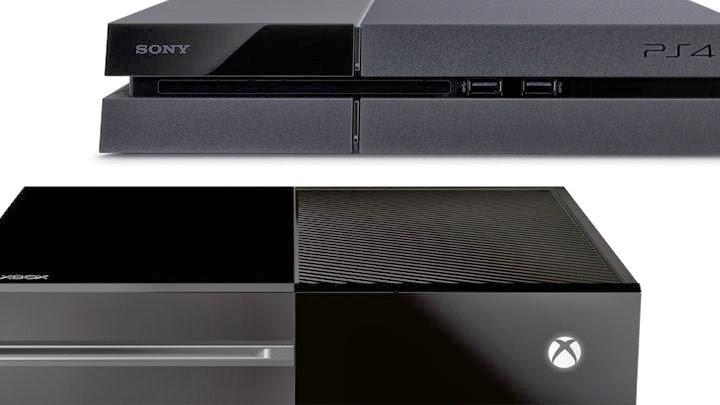
This Friday, Microsoft launches its next-generation gaming console, the Xbox One — but the news, reviews and interviews surrounding the console and its games are already starting to roll in.
Earlier this month Microsoft hosted a mammoth event in San Francisco, giving reporters a chance to play games, talk to developers and interview executives. We'll also be following up with Microsoft about their console in the lead up to the Xbox One's launch and of course hit the launch day festivities to chat with their on-hand executives.
We'll also be delivering our reviews of the hardware and its launch titles as the week unfolds, as well as videos showing our first impressions of the Xbox One's capabilities.
It's going to be a busy week, but we'll have all the news and reviews from the Xbox One launch collected in this StoryStream for you to peruse at your leisure.
And of course, last week was the PS4's big outing. You can check out all of that coverage here.

THE WII U PROVES YOU SHOULD WAIT BEFORE BUYING A NEW CONSOLE


The Wii U, launched last year, and the PS4 and Xbox One, which both hit earlier this month, are now the status quo in gaming. Or at least that's what the companies behind those consoles want you to think.
But the reality is that rushing to the newest piece of gaming hardware isn't always the best idea.
This "now generation" of consoles is a perfect example of why waiting is sometimes the best decision.

Sony's PlayStation 4 comes with arguably the best first-party gaming controller on the market. The console itself, a beefy bit of technology that can for the time being compete with...
BEST BUY: YOU WON'T HAVE ANY TROUBLE FINDING A PS4 OR XBOX ONE FOR THE HOLIDAYS
Based on acquired units outside of pre-orders for the PlayStation 4 and Xbox One, Best Buy is confident the company will be able to stock both next-gen consoles well through December, vice president of entertainment Chris Koller told Polygon.
Speaking during the Xbox One launch event in New York City last night, Koller could not comment on Best Buy's expected sales or allocations beyond pre-orders, but did note that the company had enough stock for customers who did not pre-order either next-gen console. These extra units will be available not only through this weekend, but into the rest...

SOME XBOX ONES SOUND LIKE THEY'RE EATING DISCS


Some new Xbox One owners unpacked their Day One Edition consoles today and were greeted by non-functioning disc drives, according to reports in Amazon reviews and YouTube videos.
"Disc error, it sounds like a robot is vomiting when I try to put a [disc] in," wrote Amazon user JM, giving the console a one-star review. Another Amazon user said his Xbox One's disc drive "clicks and rejects discs." A four-page thread on the Xbox forums begins with a user describing the noise as a "crunching sound," with numerous others saying they're having the same problem.


XBOX ONE CONTROLLER VS. THE PS4 CONTROLLER

New consoles don't come around every day, but these past two weeks have certainly been a "when it rains, it pours" situation. And what could be more important about a console's launch than its controller?
We already put the PS4's controller through its paces. Next up: The Xbox One's controller. Is it better than the Xbox 360? More importantly, how does it fare against the DualShock 4? We cover all your burning questions.

WATCH US WALK YOU THROUGH THE XBOX ONE'S UI
The Xbox One's user interface is a cleaned-up version of its predecessor's, but don't let its simplicity be misleading. There's a lot to dig into here, menus and submenus of options and Kinect voice-commands that will allow players to get to anywhere from anywhere within the UI. It's sort of like an open-world map that gives players freedom of navigation, even if it sometimes isn't the best listener.
The dashboard this time around has been divided into just three screens, as opposed to the previous string of several screens dedicated to movies, music, Xbox Live, games and apps. There's one...

HERE'S WHAT YOU'LL FIND INSIDE THE XBOX ONE RETAIL BOX

Are you curious what comes inside the Xbox One? Can you not wait for your console to arrive this Friday? Are you desperately wondering what will happen next in Polygon's unboxing metafiction, which began last week with the unboxing of the PlayStation 4 and will end 8 years from now with the unboxing of the Nintendo 500?
Then I think you will enjoy this unboxing video, which is full of wires and papers and thumb prints pressed into glossy plastic.
WHAT'S ON THE HORIZON FOR XBOX ONE GAMES AFTER LAUNCH


When Microsoft's new Xbox One debuts in North America later this week, it will be accompanied by more than 20 launch titles, includingDead Rising 3Forza Motorsport 5Ryse: Son of Rome and more first- and third-party games.
Like its chief console competitor, Microsoft is aiming to bring a steady stream of games to its nascent platform in an effort to keep new Xbox One owners happy. Microsoft Studios corporate vice president Phil Spencer tells Polygon that he hopes to avoid any "gaps" in bringing fresh games to the next-gen console and will likely make announcements about new titles in...

XBOX ONE WON'T LET YOU LIVESTREAM GAMEPLAY AT LAUNCH

The Xbox One won't allow gamers to livestream their gameplay via Twitch at launch, a service currently available on the PlayStation 4, Microsoft announced this morning.
"We know the ability to instantly broadcast gameplay is something the gaming community is excited about, and we are too," reads a statement from Microsoft. "We are working to ensure the initial Twitch on Xbox One broadcasting experience meets the expectations of the Twitch community, so while this feature won't be available right away, we'll let you know as soon as it is ready. Our goal is to deliver it during the first...

THE REVOLUTION WILL BE LIVESTREAMED


The ability to quickly and easily start streaming videos of yourself playing video games from a next-gen console is proving to be quite popular.
Livestreaming through Twitch or UStream is a launch feature on the PlayStation 4 and Microsoft says that ability is coming to the Xbox One early next year through their partnership with Twitch. While streaming live video gameplay to video services isn't new, historically it hasn't been exactly easy to do from a console either.
"Broadcasting from the current generation of consoles you can do, but it's really, really hard," said Matthew DiPietro,...


PS4 and Xbox One parental controls aren't quite as forward thinking as they could be


The PlayStation 4 and Xbox One clearly represent the future of living room gaming, but the parental controls both consoles offer aren't quite as forward thinking.
Both consoles have revamped how parents can limit the sorts of entertainment experiences they can experience with differing results.
The PlayStation 4's biggest parenting downfall is that consoles with multiple users ( like a family with children), a parent has to create sub accounts for their children. The sub accounts, and all of the content purchased with them, can never be converted into a "master account." Essentially, your children will never be able to grow up on the PS4, not without ditching all of the online content they purchased and starting over.
That aside, the PS4's parental controls are a bit confused. They're all based on a level system. A parent can set up restrictions for games, apps and movie watching, but have to do so using a obtuse rating system that isn't clearly explained. The console uses 8 levels for DVD movie restrictions. It uses an age setting for Blu-ray movie restrictions and 11 levels available for games and apps. Five of those game and app levels line up nicely with the five ESRB ratings which run from Early Childhood (level 2 on the PS4) to Mature (level 9 on the PS4). Those other six levels? There doesn't seem to be any explanation online or on the console about what they do. Parents can go in and view what level a piece of software is by manually viewing it's information, but there's now broad definition, making the process a bit trial and error.
The PS4 does include a number of other options that are a lot easier to understand, though. You can, for instance, disable the internet browser and the ability to log into the console without an account. You can also disable chat, disallow user-generated content, restrict content in the online store and set spending limits.
Ultimately, the PS4's parental controls feels very slapped together and not at all intuitive.
The Xbox One's system, by contrast, has a much more approachable design, but it too has issues. My biggest complaint is what neither the Xbox One nor the PS4 includes: a parental timer or curfews.
This missing feature is more noticeable on the Xbox One because the Xbox 360 has a parental timer and Windows (which uses the same sign-in as Xbox Live) includes a curfew system.
AS THE PLAYSTATION 4 AND THE XBOX ONE CONTINUE TO BROADEN THEIR REACH, BOTH THROUGH GAMING AND OTHER FORMS OF ENTERTAINMENT, IT'S GREAT TO SEE TWO MONOLITHIC COMPANIES THINKING ABOUT THE TOOLS PARENTS CAN USE TO HELP THEM BE BETTER PARENTS.
I pushed Microsoft on this seemingly odd decision to take a step-backwards on their parental controls. Here's what they had to say:
"When you look back at the last eight years, how people consume media and information has changed radically, and you can see that the experiences possible on Xbox 360 have evolved along with those changes. We are continuing that evolution with the launch of Xbox One, but we are also continuing our commitment to give parents tools and resources to make choices about their families' entertainment.
"As we built Xbox One, we also designed our parental controls from the ground up. This gave us the opportunity to explore feedback we've received from parents over the years as we came up with our launch feature set. We'll continue to expand the toolset we offer parents in future updates."
In a nutshell? Not enough people were using the feature to warrant including it. But I think that's more a problem of education than it is of desired functionality.
Sure parents can step in and tell their child when enough gaming is enough, but anything that can remove a point of conflict, through automation, is a great piece of parenting technology.
Microsoft said they also continue to investigate the possibility of integrating parental settings across the Xbox and Windows systems. This would mean that a parent could more easily track usage and set limits for all PC and Xbox gaming from one place.
What Microsoft did right with the Xbox One is come up with an incredibly intuitive, universal system for setting up restrictions on all content streamed through the console.
A parent simply marks an account as a child's account and then they can choose what age-level they believe their child's content should be.
I have a 12-year-old son, but I set his limit to 13. The second I did that the system went through and did the work for me, figuring out that a 13-year-old's game restriction would be teen, but his video restriction would be PG-13.
The system also travels, so no matter whose Xbox One he signs into, those restrictions will be there.
If you have a child 8 or under, the system defaults to the setting for their age. You can change it manually, but I kind of like that it does this for those parents who perhaps don't take the time they should to figure out how consoles work.
As the PlayStation 4 and the Xbox One continue to broaden their reach, both through gaming and other forms of entertainment, it's great to see two monolithic companies thinking about the tools parents can use to help them be better parents.
While PlayStation 4's controls seem muddled and confusing, I'm actually more disappointed by Microsoft's deliberate decision to take some of those tools away from parents, at least at launch.
The good news though?
Both systems will absolutely evolve. More than anything, this generation of consoles are about change so a fix could and should be coming.
Good Game is an internationally syndicated weekly news and opinion column about the big stories of the week in the gaming industry and its bigger impact on things to come. JOE MANUEL is a founding News Editor of RULEDEWORLD.
PreviousNext

No games during a school week? That’s rough. When I was young my mom simply said earn the right to play. If my grades never slipped, she wouldn’t revoke myNES and later SNES access. It ended up being good incentive to stay ahead of the curve in school.
I hear you though on the general point. Brian is also right about having a solid toolset to assist in this endeavor though. I have had non-gaming family members ask me to configure the parental controls on their children’s favorite system, and when I attempt to provide them with a little education on how to update or modify what I did, they show little to no interest. We need the tools AND willing parents to use them. I always do my best to encourage friends and family around the holidays to familiarize themselves with the games their kids play as well as the system they are playing on. That way everyone can be aware of the content and the restriction capabilities as needed.
Knowledge is power right?


UK finalizes criteria for in-game ads and purchases


The U.K. Office of Fair Trading published its finalized set of guidelines today for online and mobile games featuring in-app purchase options, giving game developers a deadline of April 1 to ensure their games comply with consumer protection laws.
The guidelines (available in PDF form) state games must notify consumers upfront about any possible associated costs, including in-app advertisements and purchase options, and if the app utilizes users' personal data or shares it with third parties. In-game payments cannot and should not be authorized by anyone other than the account holder or without the holder's informed consent, and according to the document, failure to comply with these principles risks enforcement action by the OFT.
The Citizens Advice Bureau has also incorporated OFT's guidelines into its instructions for parents on how they can police children's use of apps and ensure they are not influenced to make in-app purchases or have access to them without parental consent. The OFT suggests parents turn on password protection for in-app purchases and check apps beforehand for any buying options. The organization also suggests parents routinely check apps after updates to be aware if purchase options are added down the line.
Last April, following a U.K. survey which showed children's unauthorized in-app purchases could be raising phone bills, the OFT launched an investigation into free-to-play mobile and web games to determine if children were "unfairly pressured or encouraged" to make in-app purchases. According to the OFT, the investigation has been met with "positive engagement" from the U.K. games industry and "significant improvements to its practices" have been made since it began.
"The online and apps based games industry has already made significant improvements during our consultation process," said OFT chief executive Clive Maxwell in a press statement. "But it still needs to do more to protect children and treat its customers fairly. Our principles make clear the type of practices that games makers and platform operators should avoid.
"Parents and carers have an important role to help protect their child and their bank balance," he added. "Our advice is that parents check their device settings, play their child's games themselves and read the game's description online."
In September, the OFT released a report warning game developers to not target children with in-app purchase options and ads. The organization also released a set of criteria that game makers should follow to create revenue systems that are not "misleading, aggressive or otherwise unfair."
The OFT is not the only government organization focused on the crackdown of in-app purchase and advertising systems. More recently, Apple announced it would settle a complaint with the U.S. Federal Trade Commission over in-app purchases by paying out a minimum of $32.5 million. The FTC alleged that Apple had failed to properly inform users — notably parents — that having their mobile devices remember their App Store password was enabling children to make unauthorized in-app purchases.

-Ruledeworld

Zynga buys game developer NaturalMotion for $527M


Social game developer Zynga announced today its acquisition of mobile game and technology developer NaturalMotion for approximately $527 million in cash and equity.
NaturalMotion is a privately-held company best known for its work on mobile titlesCSR Racing and Clumsy Ninja. The strategic rationale listed for the company's acquisition is the expansion of Zynga's creative pipeline into two new consumer categories: racing and people simulation.
The acquisition of NaturalMotion is one of Zynga's most expensive to date, with the company having previously spent more than $300 million on acquisitions over a three year period starting 2010.
"We believe that bringing Zynga and NaturalMotion together is the right step at the right time," said Zynga CEO Don Mattrick in a statement. "Our acquisition of NaturalMotion will allow us to significantly expand our creative pipeline, accelerate our mobile growth and bring next-generation technology and tools to Zynga that we believe will fast track our ability to deliver more hit games.
"Their creative portfolio aligns perfectly with our content strategy as Zynga will now have five top brands and capabilities in the Farm, Casino, Words, Racing and People categories.  We are confident that we will build upon our market position with complementary strengths to generate long term value for our consumers, our employees and our shareholders."
In addition to the news about the acquisition, Zynga announced a cost-reduction plan that will see its workforce reduced by 15 percent.
-Ruledeworld

ZX Spectrum game devs raise concerns about soon-to-be-funded Kickstarter (update)

ZX Spectrum game devs raise concerns about soon-to-be-funded Kickstarter (update)


A group of classic game developers are raising doubts about a Kickstarter campaignfor a keyboard designed to play what they say are unlicensed versions of their ZX Spectrum games.
The Elite Systems keyboard is designed to emulate the ZX Spectrum micro computer produced in the 1980s. The keyboard is designed for use with Elite's dedicated ZX Spectrum app on iOS and later planned for Android and Windows devices. The Kickstarter campaign advertises two functions for the keyboard: use as normal keyboard and as a controller for Elite game emulator apps, but only guarantees the later at launch.
The accompanying Elite emulator app includes ZX Spectrum games that a group of Spectrum developers say have not been officially licensed to the company for reproduction and sale. Despite being contacted by Elite and declining involvement, decathlete Daley Thompson said the company published a mobile version of Daley Thompson's Decathalon anyway. Odin Computer Graphics developer Steve Wetherill wrote on his blog that he and another developer, Paul McKenna, gave Elite the rights to sell their games in 2010 but are no longer receiving royalty statements from them despite continued sales. The statement was retweeted byDynamite Dan developer Rod Bowkett — who says he gave Elite rights but has also not received royalties. A handful of other developers have posted in forums stating their games are being used with permission, but Ruledeworld was unable to independently verify them.
Developer and writer Robert Fearon raised separate concerns about Elite's claim to the Spectrum ZX name and image, noting on his blog that the current license holder is not indicated by name in the Kickstarter. The rights were initially sold by consumer electronics company Sinclair Research to electronics company Amstrad, before again passing on to BSkyB when the company purchased Amstrad. The Kickstarter page notes that Amstrad, "was acquired" but not by whom, and that Elite has entered an agreement with the unnamed "acquirer" to use the ZX Spectrum name. Additionally, the only former Sinclair designer listed on the Kickstarter is Rick Dickinson under a "special thanks" section —and while he does appear in the campaign pitch video, he is not mentioned as working on the keyboard itself.
At the time of writing, the last update to the keyboard's Kickstarter states backers should expect "last day drama" and to "hold your nerve."
"We're anticipating plenty of that in the next 24 hours, as the desires of all genuine and enthusiastic backers do battle with needs of those that are also a little cash-strapped, (we sympathize ... but we need you to stick with it)," reads the post.
The campaign has already exceeded its £60,000 funding goal by just over £5,000 and is set to wrap up at 5 p.m. ET today.  Ruledeworld has reached out to Elite Systems for comment but did not receive a response at the time of writing. Earlier today the company noted it was preparing a statement in response to the criticism.
"A number of the appeal's backers have requested that we make a statement in response comments posted on the forum of the Kickstarter appeal for the Bluetooth ZX Spectrumm," a representative for the company wrote in the campaign's comments. "We are preparing a statement which we trust will satisfy the appeal's backers."
Update: Elite Systems' Steve Wilcox posted a statement in the campaign comments section asking developers who have spoken out against the company to contact them directly.
"We wish to assure all of the appeal's backers, including the game developers that have posted, that having been in business for 30 years we take our contractual relationships most seriously," Wilcox wrote. "We urge the game developers to set out any issues which they wish to be addressed in writing and send them to us directly, using the email address below. We will then investigate and respond in writing and in detail and if able to do so will place our response in the public domain."
Ruledeworld has reached out to affected developers and will share more details as we receive them.

Razer to make Xbox One controllers, arcade sticks and more

Razer to make Xbox One controllers, arcade sticks and more


Entertainment hardware manufacturer Razer is partnering with Microsoft to create peripherals for the Xbox One, the companies announced today.
Razer's Xbox One product line will include controllers, an arcade stick and more, according to a press statement. The company has previously worked with Microsoft peripherals and accessories for the Xbox 360.
"Razer is dedicated to improving the overall experience from the games themselves to the player, be it console or PC," Razer CEO and creative director Min-Liang Tan said in a press statement. "By working with a company as prestigious as Microsoft on a system as sought-after as the Xbox One, we'll be able to accomplish just that."
More information on specific products and launch dates will be made available in the coming weeks.
Last summer, Tan tweeted that Razer doesn't make peripherals for the PlayStation line of consoles because he doesn't play his own PlayStation 3 that much. To tweets responding to his statement, Tan said he would rather "design stuff I actually want as a gamer rather than sell stuff to gamers for money." Currently there is no word on company plans for PlayStation 4 line.

Ouya gets double the storage and a 'refined' controller

Ouya gets double the storage and a 'refined' controller


A new version of the Ouya, the diminutive Android-powered console that rose to fame in 2012 on Kickstarter, is now available with 16 GB of storage and a "refined version" of its controller.
According to the device's creators, the controller's new Bluetooth configuration offers "better buttons" and "faster response." The new, matte black console also sports the latest Ouya firmware and "boosted wi-fi connectivity."
The new version retails for $129.99 though Amazon in Canada and the U.S. and on Ouya's official site. The original 8 GB version will remain available for purchase.
You can check out our impressions of the original console Polygon's Ouya review. You can also read our interview with those behind Ouya to learn more about how they want to change and improve the console over time.

PLAYSTATION 4 [THE REVIEW]


PLAYSTATION 4


THE REVIEW


In the seven years since the introduction of the PlayStation 3, we've seen our gaming consoles transform into living-room hubs through constant evolution and software updates. Those updates weren't always smooth – though on PS3, they were always happening – but it's easy to see just how far the platform has come.Meanwhile, the designers of the PlayStation 4 were taking notes and designing a console that, feature by feature, sought to address the failings of its predecessor. The PS3 was notoriously difficult to program for, thanks to its proprietary silicon. So the PS4 was built to be developer-friendly, with a familiar, PC-like architecture. The PS3 was announced with a bizarre, boomerang-shaped controller, and launched with the rumble-free Sixaxis controller before settling into the never-great DualShock 3 controller. So the PS4 comes with the DualShock 4, inarguably the best controller Sony's ever made. And the PS3 launched at an abnormally high price point, costing $200 more than its competition. So the PS4 carries a far more aggressive price, asking $100 less than the competition this time  AROUND.

While Sony in 2006 was focused on driving adoption of the Blu-ray standard, envisioning another home media boom that never quite materialized, Sony in 2013 has no such distractions. The PS4 isn't built to sell 3D TVs, or Blu-ray discs or any other corporate mandate. It's a gaming console, a clear message that Sony has been quick to repeat. 

That focus has resulted in a console that's better positioned than the PlayStation 3 was in 2006 to compete in an expanding turf war for the living room. But that same focus has also kept Sony from taking the kinds of chances that make generational leaps so exciting.


        [Play Station 4 is a fantastic next-gen                console lacking a must-have game]


THE CONSOLE

HARDWARE & DESIGN

The PS4 is Sony's most attractively designed piece of hardware. It's a beautiful system, with a sharp, slightly angled profile accented by a light bar that acts as a console status indicator.

On the back, PS4 has gone digital-only with HDMI/optical ports, and no analog audio or video outputs. We appreciate the internal power supply — it sounds like a small thing, but it's one less object to sit on the shelf next to or behind the PlayStation 4.

In the bad column, it's a collection of moderate to minor annoyances. The PS4 doesn't support the new 802.11ac wireless standard, instead relying on an 802.11b/g/n radio at 2.4 GHz — no 5 GHz support here either, all of which is disappointing to see on a consumer device in 2013. More annoyingly to many on staff, the PS4 doesn't include an IR port for universal remotes, nor does it support Logitech's PlayStation 3 Bluetooth Harmony adapter or the PS3 Bluetooth Blu-ray remote. This omission seems to signal Sony's abandonment of the media aspirations that drove much of the PS3's basic design.
Players who want to game privately on their consoles might be temporarily annoyed at the absence of Bluetooth headphone audio support for the PS4 at launch. 
This is offset somewhat: the PS4 can broadcast all game audio (and voice chat) to the audio/mic jack on the DualShock 4, which is compatible with all headphones and mobile headsets using 1/8 inch audio adapters — though enabling game audio output on the DualShock 4 disables all audio via HDMI and optical out.
Despite these problems, Sony nails the fundamentals with the PS4 hardware. The half-gloss, half-matte finish is a pleasant visual compromise. It's a grown-up machine, designed more like a stylish DVD player than a gaudy video game console. It's a small, attractive system, and one that also happens to pack more powerful hardware in its diminutive frame than any other console.
The PS4 is Sony's most attractively designed piece of hardware.
It's an impressive technical achievement. It's also compact enough to fade into your entertainment center without being distracting or ostentatious, and we appreciate that it retains the PS2's and PS3's ability to stand vertically. Those of you with frisky pets or children may want to invest in the vertical stand, sold separately, for some added stability.
Oh, and it will charge controllers over USB while in standby mode. Finally.


CONTROLLER

DUALSHOCK 4

We can say this unequivocally: The DualShock 4 is the best controller Sony has ever made.

Now that the PlayStation 4 and a new console generation are upon us, a contingent of Polygon's editorial staff feels free to finally admit a deep, unbridled hatred of the DualShock 3. The sticks were too close together, too squishy; the triggers weren't triggers; those of us with bigger hands had difficulty using the controller for very long.

DUALSHOCK 3
DUALSHOCK 4

DUALSHOCK 4

Sony has solved every one of these problems with the DualShock 4. Its sticks are farther apart, with semi-concave pits in the middle designed to hold the tips of your thumbs in place. The shoulders feature actual concave triggers with pull similar to an Xbox 360 controller.

The controller is just a little heavier, just a little bigger. It's much more comfortable to hold over long periods of time. Making even die-hard DualShock 3 haters on the Polygon staff converts, the DualShock 4 is the most immediately apparent improvement offered by the PS4.

The DualShock 4 is the best controller Sony has ever made.
IMPERFECTIONS
There are several small touches that, as with the console itself, underscore a sense of general hardware quality and polish. The DualShock 4's front-facing light glows blue for the primary connected player and changes colors based on the order in which it's synced to the console. Games can also take over the light and change its color, but the most practical use is the amber glow the DualShock 4 emits while it's charging.
While Sony has seemingly done nothing to expose or surface it, the DualShock 4 also introduces refined gyroscopic and accelerometer-based motion control. It's an incredible improvement from the Sixaxis and the DualShock 3.


The DualShock 4 isn't without some minor issues: the new options and share buttons are far too flush with the face of the controller and take too much pressure to use. It quickly proved easier to use the PlayStation button — now situated between the controller's analog sticks — to suspend a title to take quick breaks.
But our biggest complaint for a controller that some at Polygon otherwise consider the best they've ever used: the battery life.
The new touchpad works well for certain functions, like selecting weapon modes in Killzone: Shadow Fall. But it proved a poor mouse substitute inAssassin's Creed 4's map screen, with slow, latency-prone movement. We'll need more opportunities to use it in more titles before we can determine whether this is a hardware or software problem.
But our biggest complaint for a controller that some at Polygon otherwise consider the best they've ever used: over the course of 100-hundred plus hours with the DualShock 4, the battery life appears to sit somewhere in the 7- to 8-hour neighborhood, a fraction of the 30-hour battery life on the DualShock 3. As the system only includes one micro USB cable 1.5 - 2m in length, marathon sessions might happen on your floor near the PS4. As with the DualShock 3, the DualShock 4 battery isn't intended to be replaced, though enterprising users may be able to find replacements online in the coming years.

OPERATING SYSTEM

USER INTERFACE & EXPERIENCE

At first glance, it may appear that the PS4's user interface shares little in common with the PlayStation 3's "XrossMediaBar" interface, a familiar sight for owners of Sony's 2006-era televisions. But the PS4's interface is again similar to Sony's current televisions and with use, a clear evolution of the XMB is apparent. It retains its predecessor's speed, while adding a flexibility that the rigid XMB hierarchy never allowed.

IMPROVEMENTS

Little things stand out. You can temporarily suspend a game at any time by hitting the PlayStation button and, say, change your display or audio settings without quitting the game in question. After seven or eight years of the Xbox 360 and PS3, navigating the PS4's menus and UI quickly and with little lag is one of the more refreshing elements of the next-gen console experience.
One major, appreciated change: the bifurcated User/PSN ID system of the PS3 is gone. You can now skip the PS3's user ID/PSN ID association process and directly download your profile onto the PS4. The PS4 also supports greatly improved user switching, and its guest feature allows you to temporarily download a PSN profile onto a friend's PS4 and delete it when logged out. Other small touches delight — like double-tapping the PlayStation button to toggle between active apps and games.
The legacy of the Playstation 3's operating system remains in the PS4's often confusing hierarchy of menus, sub-menus and hidden options. For example, the console's Notifications menu includes Notifications, Invitations, Game Alerts, Downloads and Uploads, all as distinct inboxes. The Friends menu includes separate inboxes for Friend Requests and Name Requests, both of which also appear under Notifications. Perhaps the utility of these discrete areas will become more clear with more time spent using the system.
After seven or eight years of the Xbox 360 and PS3, navigating the PS4's menus and UI quickly and with little lag is one of the more refreshing elements of the next-gen console experience.
Local media playback, a major feature of the PS4's predecessor, isn't supported. The PS4 also lacks any meaningful digital library management. Games are listed in an endless horizontal line with no organizational options whatsoever. Every single PS4 disc that you insert into the drive automatically installs and slots itself into that list, surely an impediment to finding what you're looking for quickly.
Other advertised PS4 features haven't made it in time for even the system's day one update. The console lacks a sleep feature, meaning it requires a full reboot whenever it's shut down — and active game sessions are closed. We also hope that Sony takes a second crack at the PS4's native video capture and sharing. It's a cool idea, and the implementation works, but the video we've seen is heavily compressed and muddy. It robs games on the platform of some of their wow factor
It's also worth pointing out that while the interfaces of the PlayStation 4 and PlayStation Vita are both well-suited for their respective mediums, a television and a touch-controlled portable, respectively, the differences between them provide a curious contrast for two current products bearing the PlayStation brand name.

PLAYSTATION NETWORK

ONLINE PLAY

The PS4 makes some fundamental improvements to basic network functionality. You can now join friends' games from your friends list. The PS4 also introduces game-independent party chat for up to eight people, a godsend for multiplayer gamers hoping to avoid toxic public lobby audio.

IMPROVEMENTS

The PS4's home screen includes a feed of your friends' activity called "What's New," and this demonstrates quite a bit of potential. It shows what games your friends started to play, when they're livestreaming and … maybe too much stuff, actually. The What's New feed is a wall of informational text and from a distance, it's difficult to parse. This is indicative of a general tendency toward too many options, and an excess of surfaced information throughout the PS4's PSN functions.
There are other additions that seem beneficial, but have strange oversights that make them potentially problematic. The PSN friends limit has been increased to 2,000, which is great — but there's no way to organize them. Narrowing your friends or joining larger groups remains outside the abilities of the PlayStation 4 at present, despite system-wide Facebook integration, and sharing options that include Facebook groups. The PS4 also supports real names for friends, which could be a lifesaver — but it requires two-way authorization between both people to activate.
PSN is full of small examples of a system that badly needs reorganization and some cleanup. But make no mistake: Sony seems determined not to get left behind or leapfrogged in online this time around, and the basic functionality that eluded PSN on PS3 is now present.
The day-one inclusion of Twitch integration works well, and it's a good thing — the PS4 encrypts its entire HDMI signal in HDCP, which prevents it from working with most capture devices out of the box. For most users, the Twitch streaming is all you'll need, though we have concerns about general video quality via the system's internal hardware.
Trophies work similarly to the way they did on PS3, but now also include trophy rarity — something we hope everyone everywhere steals as quickly as possible.

PLAYSTATION STORE

Meanwhile, the PlayStation Store is very similar to the current PS3 store, which has made enormous strides over the last few years — but it shares the discoverability and organization problems of the existing store as well. It's not fair to crucify Sony over this, as every online marketplace shares these issues to some degree or another. But we're still waiting to see if anyone can address these problems.
And if multiplayer gaming isn't your thing, the PS4 doesn't lock any of its media apps behind the PS+ gate.
After seven years, Sony is joining the competition by charging for multiplayer gaming on the PlayStation 4. Players will need a subscription to Sony's PlayStation Plus service, which thankfully provides much more than unfettered access to multiplayer gaming; it also provides regular discounts on digital releases and a regular stable of free games. For the right player, it's a tremendous value. And if multiplayer gaming isn't your thing, the PS4 doesn't lock any of its media apps behind the PS+ gate. Netflix, perhaps the most prominent example, requires nothing more than its own subscription to watch on the PS4.
Perhaps as a signal to how seriously Sony is taking online multiplayer, it's included a headphone jack on the controller and a headset with every PlayStation 4. That inclusion, coupled with a new party chat system, brings PlayStation 4 to feature parity with existing competition and sets it up for continued innovation in the online gaming space.

CAMERA

FEATURES & CAPABILITIES

While Sony nixed plans to include the PlayStation Camera with the PS4 by default, it is still for sale, and adds some options to the system. Sony has touted the addition of voice commands to the PS4, though our limited time with this feature yielded mixed results. Commands were limited and poorly explained, and frequently went unanswered.
The easiest comparison would be with the early feature set of the Xbox 360's Kinect. The PlayStation Camera is a higher-definition device, and is likely more advanced, but there is a distinctive "first attempt" feel to the camera that seems at odds with the PlayStation 4's efforts at broader platform streamlining and refinement. But worse for Sony, its capabilities and functionality look downright primitive in comparison to the Xbox One's Kinect.
The PlayStation Camera's overall place within the PlayStation 4 ecosystem and Sony's intentions for the camera are unclear at this time.
There's no IR component, which forces users to maintain a minimum amount of light. The PlayStation Camera adds facial recognition to PS4's account system, with the procedure for adding biometric data requiring a short setup for each user. At the login screen, the camera scans the scene and, as long as it's well-lit, identifies faces it recognizes. If a user wants to log in, they simply raise the controller to match a box on the screen. The catch is, if you're using a controller here, it's easier to perform the same task with the controller.
The PlayStation Camera's overall place within the PlayStation 4 ecosystem and Sony's intentions for the system are unclear at this time. While there were elements of the new console that were clearly designed with the camera's capabilities in mind — the somewhat vestigial indicator light on the DualShock 4 comes to mind — most traces of the potential future are difficult to find in the system as it exists now.
At least it's unassuming. Whether with its stand or alone, it's a small device that doesn't occupy the same kind of real estate as the original Kinect or its hefty successor. But that's also sort of the problem. This is Sony's third attempt at a camera peripheral for a PlayStation system.
Each previous attempt was marked by an initial burst of enthusiasm and software support, something the PlayStation Camera lacks outside of the cute but minimal Playroom application included on every PS4. More damning, every previous camera was quickly abandoned, with little software support and zero official acknowledgement of its relevance.

SETUP & PERFORMANCE

PATCHES & INSTALLS

We found the initial setup of the PlayStation 4 to be a relatively painless process. Upon first booting up the system, we had to download an initial patch to connect the system to PSN.
As of the time of this review, that patch is about 300 MB and took less than 15 minutes to download and install (though more crowded servers on launch day could slow that considerably).
Once the system is up to date, connecting to an existing PlayStation Network ID is a smooth process, taking just a few minutes. This brings in all the friends and trophies lists from the PS3 and Vita.
The console will also ask you if you'd like to make your real name accessible to specified friends. This Real Name functionality is a great addition and doesn't feel overly cumbersome, despite essentially requiring both parties to accept.
When PlayStation Network is humming along and working as expected, it's smooth and downloads games quickly.
If you find yourself at a friend's house, you can opt for a "guest" account. This will let you sign into your own PSN account, but not have to worry about leaving secure data behind when you log off. A handy addition, especially for dorm dwellers with cagey roommates.
Installing our first games, both from disc or through PSN, was mostly painless, though we did run into some connectivity issues that resulted in downloaded games being inaccessible until the console re-connected to the network. But when PlayStation Network is humming along and working as expected, it's smooth and downloaded games quickly. It's just not terribly easy to navigate and will definitely take some getting used to, with vague iconography to guide you.
SECOND SCREEN

PS VITA & REMOTE PLAY

Remote Play of PS4 titles on the PlayStation Vita has been one of the system's most anticipated features.
Remote Play works well via wireless LAN in supported titles; several third-party releases have gone above and beyond basic support, including full Vita control in games like Battlefield 4 and Assassin's Creed 4. Sony's own first-party games like Killzone: Shadow Fall andKnack also support the feature.
However, dreams of universal access to PS4 content from anywhere via the Vita will have to wait, as even locally, Remote Play suffers from issues similar to those encountered by Wii U users. Players who move too far away from their routers may lose their connection to the PS4 or otherwise render their game unplayable.
We are somewhat confused at Sony's aggressive pairing of the Vita and PS4's fortunes with the emphasis on Remote Play, as the former device has struggled to establish a sustainable install base outside of Japan after almost two years of availability. But the potential is there for Remote Play to present a meaningful differentiation from the PS4's competition.
The Vita also presents an avenue for second-screen functionality for PlayStation 4, but Sony has smartly expanded beyond their own handheld with this week's release of the PlayStation App. The app allows message and friends list management as well as trophy options, but the primary functionality seems aimed at providing augmented app experiences for PlayStation 4 software. Sony's current showcase for the app happens through their Playroom software, where players can draw shapes and flick them out to entertain their goofy robot minions.
It remains to be seen whether developers will capitalize on the PlayStation App with any regularity, however. Even studios that are embracing second-screen functionality on the PlayStation 4 are relying on their own, dedicated applications on Android and iOS. But at the very least, Sony has multiple means of achieving feature parity with the Wii U and the Xbox One's new version of SmartGlass. The near-ubiquity of second-screen availability will hopefully encourage developers to add it to their games, which can only be a good thing.
GAMES

LAUNCH LINEUP

After we've spent approximately four weeks with the PS4 at review events and with review hardware, Sony's primary goal for the system is clear.
There are pros and cons to this approach. This drive toward games first will in all probability lead to a strong ecosystem of exclusives and multiplatform titles on the PS4. The emphasis on powerful hardware dedicated to gaming software is already yielding tangible advantages over the competition, with games like Battlefield 4 running in higher resolution on the PlayStation 4 than the Xbox One.
Make no mistake: the PS4 is demonstrably more powerful than the competition.
However, at launch, the PS4 has failed to muster a software library that sells that hardware.Downloadable shooter Resogun is a beautiful bright spot in the PlayStation 4's lineup, and even better, it's free for PlayStation Plus subscribers. But Sony's major AAA launch exclusives are impossible to recommend. Killzone: Shadow Fall is gorgeous but poorly designed and boring for the duration of its campaign. Sony Japan's Knack is a surprisingly difficult grind, which drags on for too long with too little to say or do.
Worse for Sony, the delta between most next-gen and current-gen releases this fall has proven minimal beyond superficial visual improvements. While games like Assassin's Creed 4 look better on PlayStation 4, they aren't enough to recommend stepping onward and upward to a new console.
This is an enormous challenge for the PS4. As a system focusing on games, that's where it currently lives or dies. Just as problematic, Sony's currently announced slate of platform exclusives is thin — shy of Infamous: Second Son, there's little to carry the PS4 through the spring and summer of 2014. This is a notoriously precarious period for new consoles, as demonstrated by the software struggles of both the PlayStation Vita and the Wii U in the year following their release, and we're not sure what bridges Sony intends to build between release and holiday 2014.
Sony's repeated emphasis on indie titles has borne little fruit for launch outside of the disastrousContrast, which appears for free on PlayStation Plus. We expect that 2014 will be dotted with some of the titles that Sony brought to this year's E3 and Gamescom stages — but their absence from view has us wondering what happened and, more specifically, why they couldn't make it for launch.
To be clear, we're not saying there won't be good, interesting software for the PS4. We think that's inevitable. But we don't know what that software will be, or when it will see release.

CONCLUSION

NEXT-GEN IS HERE

The PS4 hints at plenty of other possibilities. Local network play via the PS Vita has an enormous amount of potential. The PlayStation App and even the Playstation Camera may provide opportunities for developers to broaden the appeal of the PlayStation 4 beyond the hardcore audience it currently seems so intent on courting. Unlike the PlayStation 3, Sony's latest effort was built to evolve.
But the PlayStation 4's focus on gaming — and only gaming — is undermined by a distinct lack of compelling software. That failing is sure to improve — better games and more of them will appear on the PlayStation 4 — but right now, this is a game console without a game to recommend it. Early adopters of the PS4 this fall are buying potential energy. We're just waiting for a place to spend it.

tHAT'S IT FOLKS THANKS FOR READING MY ARTICLE . WATCH OUT FOR MORE INTERESTING ARTICLES


Translate

Type of Article you are interested in ?